Reduced Storm Risk
Lower the overall profile of an overgrown tree while retaining a strong structural frame.
Height reduction and canopy management converted into safe, AS4373-compliant arborist pruning.
Effective height and canopy management across West Mackay
When property owners request tree lopping in West Mackay, they usually want to control an overgrown tree that threatens power lines, blocks light, or poses storm risk. We convert crude lopping requests into safe, long-term canopy reductions.
Trees cut indiscriminately in Mackay rapidly sprout weak 'epicormic' shoots. In high wind, these shoots snap off easily. Correct canopy reduction ensures the tree stays stable and safe through the wet season.
Lower the overall profile of an overgrown tree while retaining a strong structural frame.
Prevent fungal hollows and interior wood rot caused by flush topping stubs.
Proper reduction cuts slow down aggressive regrowth compared to traditional topping.
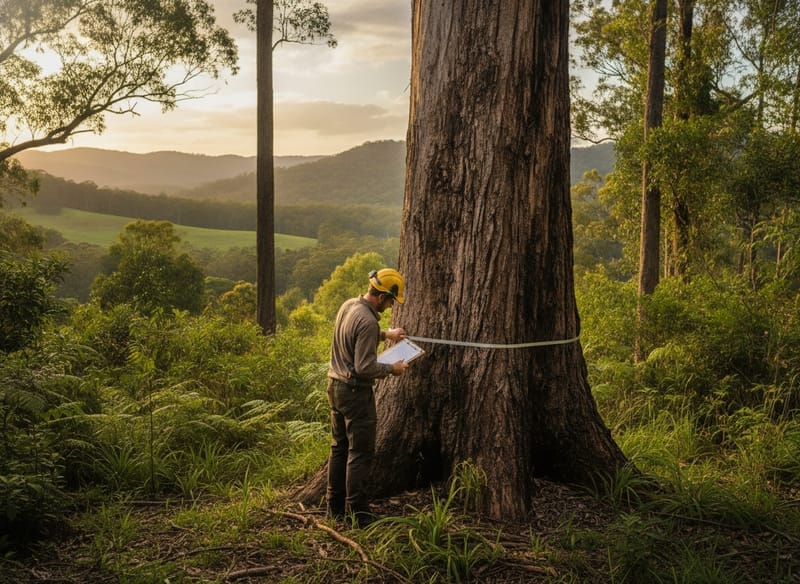
We evaluate why you want the tree lowered and assess whether reduction or removal is best.
We mark suitable lateral growth points to shorten canopy branches safely.
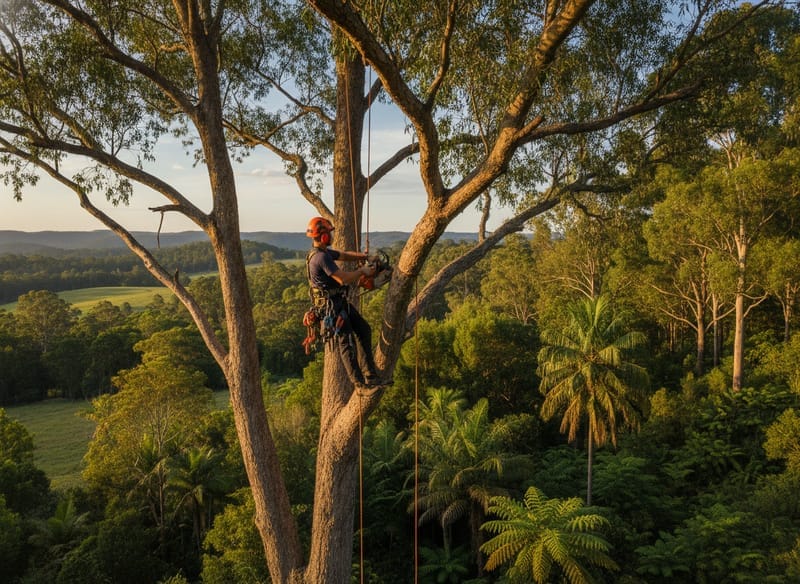
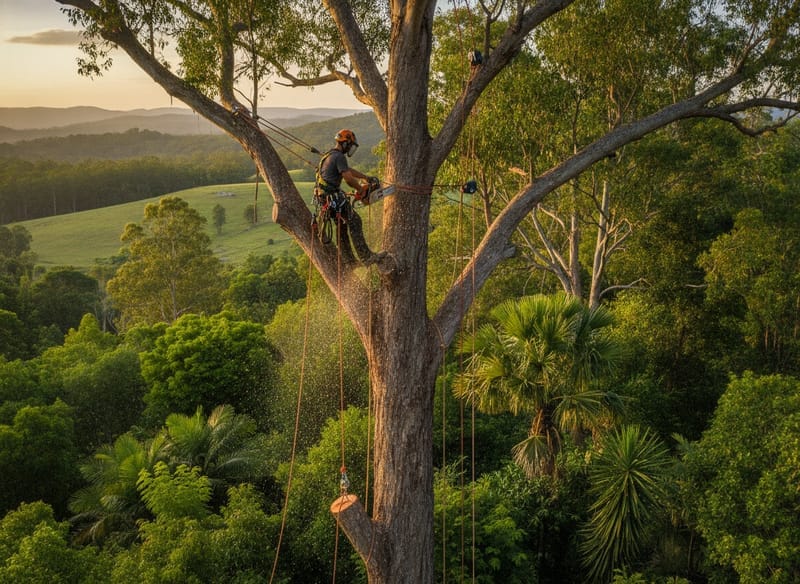
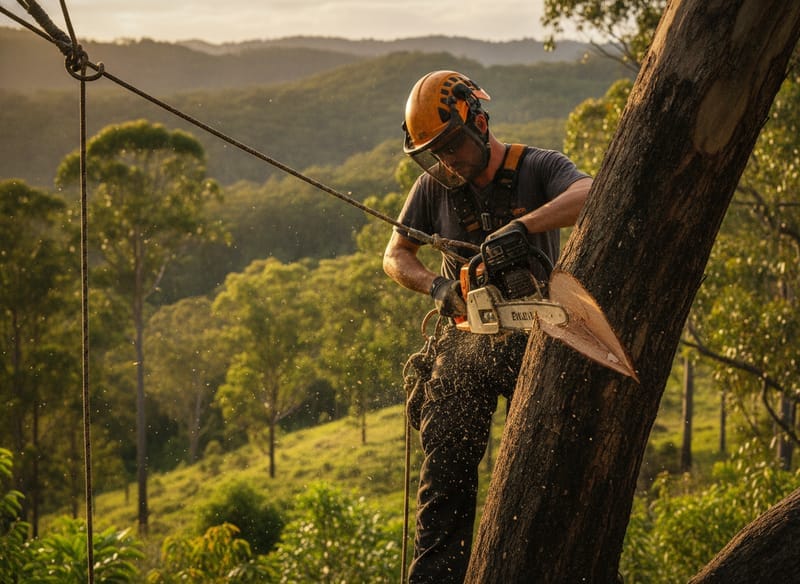
Climbers carefully reduce upper branches using rigged lowering lines.
All foliage is processed into wood chips and site ground surfaces are raked clean.
For reliable Tree Lopping West Mackay residents turn to when canopies outgrow their space, our crew provides professional, safe, and precise canopy management. West Mackay features some of the region's most established residential streets, where classic Queenslanders and post-war homes sit under mature, fast-growing trees. Whether you are dealing with a heavy backyard mango crowding your roofline, broad poinciana limbs encroaching on overhead service cables, or canopy density that blocks out essential breeze, managing tree size is an essential part of property upkeep. While lopping is the common term used by property owners looking to reduce height or clear back unruly limbs, unmanaged hacking causes severe long-term hazards. Our team combines the size-reduction outcomes you want with qualified arborist methods, ensuring your trees remain safe, structurally sound, and capable of withstanding the tropical storm season across Mackay.
Traditional tree lopping—often called topping or heading back—involves cutting branches flush between nodes or lopping large structural stems to arbitrary heights. In the wet tropical climate of Mackay, this outdated practice creates severe structural problems. Indiscriminate cuts leave wide, flat wounds that cannot heal, allowing heartwood decay and fungal pathogens to enter the trunk quickly. When a tree is aggressively lopped, it responds in panic mode by producing dense clusters of rapid, weakly attached water shoots known as epicormic growth. These shoots grow at breakneck speed during the monsoonal wet season from November to April. Because they attach only to the outer bark layer rather than deep within the wood grain, they become prime failure points during severe summer storms and tropical cyclones. Our solution replaces destructive topping with AS4373-compliant crown reduction and selective pruning. We reduce the height, bulk, and reach of your tree by cutting back to viable lateral branch collars that can compartmentalise the wound. This controlled approach relieves weight from overextended limbs, maintains the tree's natural centre of gravity, and delivers lasting clearance without triggering dangerous, hyperactive regrowth.
When homeowners contact us for tree lopping, we assess the species, location, and structural health to recommend the correct, standard-compliant technique to achieve your clearance goals:
We shorten the overall height and lateral spread of the canopy by reducing outer branches back to living lateral limbs that are at least one-third the diameter of the parent branch. This preserves the branch bark ridge and collar, allowing the tree to seal the wound while significantly lowering wind drag.
We systematically remove up to 20 to 25 percent of selected secondary live branches throughout the inner canopy. This reduces the sail effect during high-wind cyclone events, allows light to filter through to understorey turf, and maintains the primary architectural framework of the tree.
Our climbers remove lower secondary branches to establish clean vertical clearance over residential rooflines, carports, driveways, fence lines, and council footpaths, ensuring clear access for delivery trucks, caravans, and lawn maintenance.
Targeted pruning focused on heavy, overextended limbs that overhang bedrooms, gutters, or solar panel arrays. We selectively reduce weight at the branch tips, relieving mechanical lever-arm stress on mature unions to prevent spontaneous limb drop in hot or wet weather.
When a tree has been previously ruined by severe topping, structural decay, or storm damage and cannot be safely retained, our team performs staged dismantling using rigging blocks, friction bollards, and spider lifts to lower sections safely within confined West Mackay side yards.
From your initial enquiry to the final sweep of your yard, our tree reduction workflow is built around safety, property protection, and clear communication.
Tree work is high-risk operations that require formal qualifications and strict adherence to Australian Standards. When booking our Tree Lopping West Mackay service, you are backed by skilled professionals operating in full compliance with AS4373-2007 (Pruning of Amenity Trees) and AS4970-2009 (Protection of Trees on Development Sites).
Our tree climbers hold AQF Level 3 in Arboriculture with certified tickets in Chainsaw Operations, Working at Heights (RIIWHS204D), and Elevating Work Platforms. Our senior assessments are guided by AQF Level 5 Consulting Arborists, ensuring that any tree risk assessment meets rigorous technical criteria. Our business is fully insured with comprehensive public liability cover and full WorkCover Queensland protection for all team members on site.
West Mackay presents a distinct set of urban and environmental conditions. Blocks around Shakespeare Street, Nebo Road, and Bridge Road often feature narrow side access and established vegetation planted decades ago. Species such as Mango (Mangifera indica), Poinciana (Delonix regia), African Mahogany (Khaya senegalensis), and native Forest Red Gum (Eucalyptus tereticornis) flourish in the local alluvial soils and high-rainfall climate.
Because Mackay experiences heavy monsoonal rain between November and April, the ground can become thoroughly waterlogged. When high cyclonic winds hit saturated topsoil, dense, top-heavy canopies act like giant sails, pulling root plates out of the ground. Proper canopy thinning and weight reduction prior to storm season are critical steps for safeguarding West Mackay properties.
From a regulatory standpoint, the Mackay Region Planning Scheme 2017 governs vegetation management, with particular attention to mapped biodiversity, heritage, or environmental significance overlays. While private residential lots generally do not carry blanket tree bans, work on council-owned street verges is strictly controlled under Local Law No. 1. If you live in an overlay area or need clarity on exemptions following severe weather declarations, we check your property mapping and provide formal arborist reports when required.
Once your tree's canopy has been reduced and cleared, following a few basic maintenance steps will ensure long-term health and minimise future storm risk. - Mulch the Root Zone: Spread a 75–100mm layer of fresh organic arborist woodchip around the drip line, keeping it 100mm clear of the trunk bark. This preserves soil moisture, regulates root temperatures, and suppresses weeds. - Monitor Water and Nutrient Stress: Trees that have undergone substantial reduction cuts require consistent moisture during the dry winter and spring months to support defensive compartmentalisation. - Inspect Growth Annually: Rapid tropical growth means epicormic water shoots can develop within 12 to 18 months. Inspect the canopy before the start of each cyclone season in October. - When to Call Us Back: If you notice sudden deadwood formation, fungal fruiting brackets on the trunk, peeling bark, or crossing limbs that rub together in the wind, contact our arborists for a prompt follow-up assessment.
Costs for canopy reduction depend on tree structure, height, access, and overall waste volume.
We provide written quotes outlining the exact reduction methods used.
Providing canopy reduction and pruning across West Mackay and regional suburbs.
Talk with our qualified arborists about safe height management solutions.
Get a Height Reduction Quote