Immediate Hazard Control
Stabilise dangerous timber hanging over living quarters and powerlines.
Priority response for fallen trees, split trunks, and immediate hazards over houses and cars.
Hazard mitigation and emergency clearing across West Mackay
Monsoonal rain and cyclone weather frequently push unstable trees over in West Mackay. Our emergency tree removal team prioritises hazardous trees to protect life and property.
Saturated clay and sandy soils during tropical rain events cause whole-tree root plate failures in West Mackay. Heavy poincianas fall cleanly across roads and carports when soil loses friction.
Stabilise dangerous timber hanging over living quarters and powerlines.
Clear weight off damaged roofs quickly so tarps can be fitted before rain continues.
Clear fallen trunks blocking main garages, driveways, and street paths.
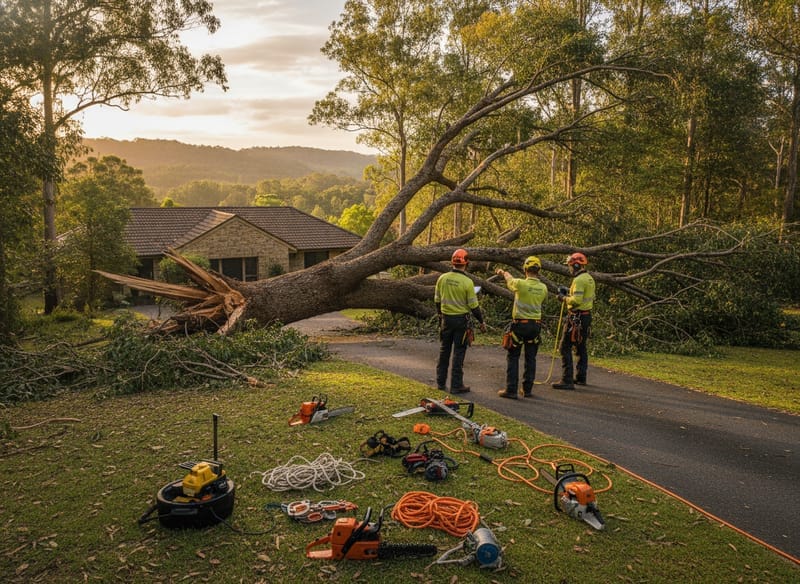
We inspect electrical safety, structural tension, and property stability on arrival.
We secure damaged tree sections with winches or cranes before making initial cuts.
Tensioned limbs are systematically removed piece by piece to relieve weight.
Debris is cleared from structures and walkways, rendering the site safe.
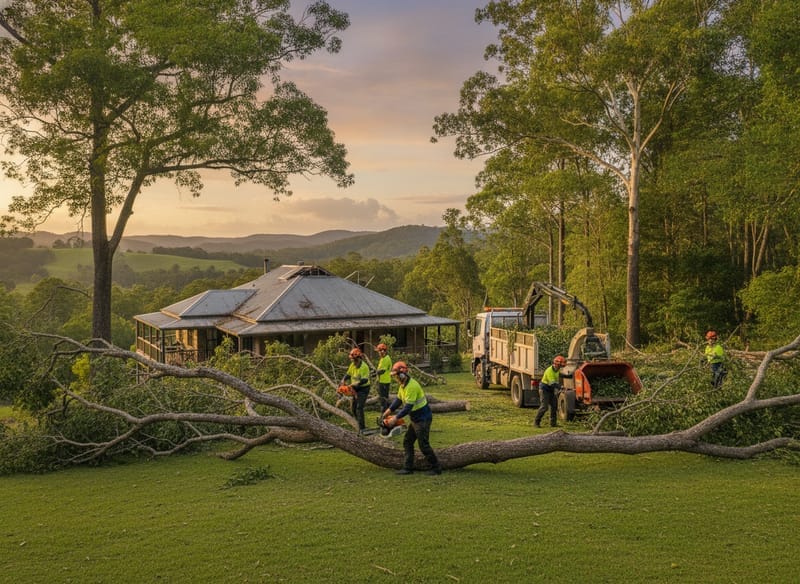
When severe monsoonal weather strikes the Pioneer Valley, action is essential to protect your family and property. We provide rapid-response Emergency Tree Removal West Mackay homeowners and commercial property managers rely on when mature trees fail. In West Mackay's established residential streets, heavy tropical downpours quickly saturate the topsoil around classic Queenslanders, destabilising rootplates and causing heavy limbs or entire canopies to collapse without warning. Our experienced crew operates specialised heavy-rigging equipment, wood chippers, and high-capacity tipper trucks ready to dispatch across West Mackay, South Mackay, and East Mackay. Whether an enormous poinciana has split over your roof on Nebo Road, an African mahogany is leaning dangerously toward power lines, or a saturated backyard mango tree has crushed a boundary fence, our primary focus is securing the site and eliminating immediate structural threats.
Attempting to tackle storm-damaged timber with a domestic chainsaw is one of the most hazardous tasks a property owner can undertake. Fallen or partially suspended trees contain immense stored kinetic energy—commonly known in arboriculture as "spring poles" and "barber chairs." Cutting into timber under erratic compression or tension can cause massive trunks to violently snap, kick back, or roll without warning, risking severe physical trauma and catastrophic secondary structural damage. Under-qualified operators often make compromised situations worse by making ill-considered cuts that drop unstable limbs directly through tiled roofs, verandahs, or underground utilities. Furthermore, improper limb lopping leaves jagged tears that invite wood-decay fungi, accelerating rot in surviving structural branches. We resolve high-risk failures using engineered dynamic rigging, sectional dismantling, and controlled winching. Our AQF Level 3 climbing arborists systematically de-tension compromised wood before making final cuts, strictly adhering to AS4373 Pruning of Amenity Trees standards when retaining salvageable canopy. We stabilise the immediate emergency zone first, ensuring your dwelling is weatherproof and structurally safe before executing clean, low-impact removals.
We utilise industry-grade machinery and advanced dismantling techniques to extract hazardous, wind-blown, and compromised trees safely from tight suburban blocks.
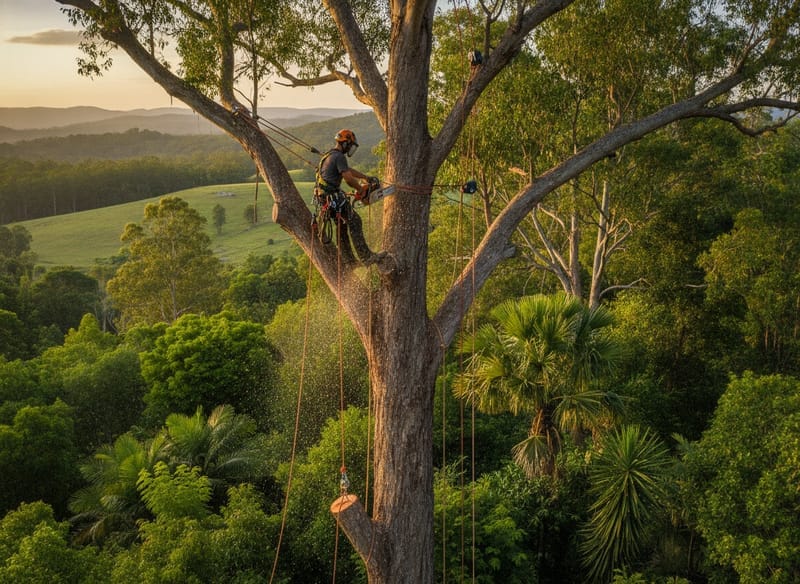
Using arborist-grade lowering devices, high-tensile synthetic ropes, and friction bollards, our climbers dismantle massive storm-damaged limbs piece by piece. This technique eliminates ground-impact shock and protects fragile Queenslander tin roofs, boundary fencing, and landscaped gardens in confined West Mackay yards.
For partially uprooted stems or trees hung up in adjacent canopies, we deploy heavy-duty mechanical winches and vehicle-mounted pulling systems. This enables our crew to guide the trajectory of massive trunks away from buildings, overhead power lines, and neighbouring assets into controlled drop zones.
Storm winds frequently snap heavy branches that remain dangerously lodged high within the crowns of mature poincianas and raintrees. We utilise rope-access canopy climbing techniques and telescopic pole saws to safely isolate, rig, and lower hung-up wood before it dislodges in subsequent gusts.
When trees collapse directly across occupied dwellings or vehicles, conventional ground felling is impossible. We coordinate mobile crane lifts to hoist multi-tonne timber sections vertically off damaged roofs, neutralising structural load without causing further impact to the underlying building frame.
Monsoonal deluges frequently cause full rootplate heave in waterlogged alluvial soils. Our team stabilises tipped root balls using ground anchors and counter-rigging before severing the root plate from the main trunk, preventing catastrophic trunk recoil.
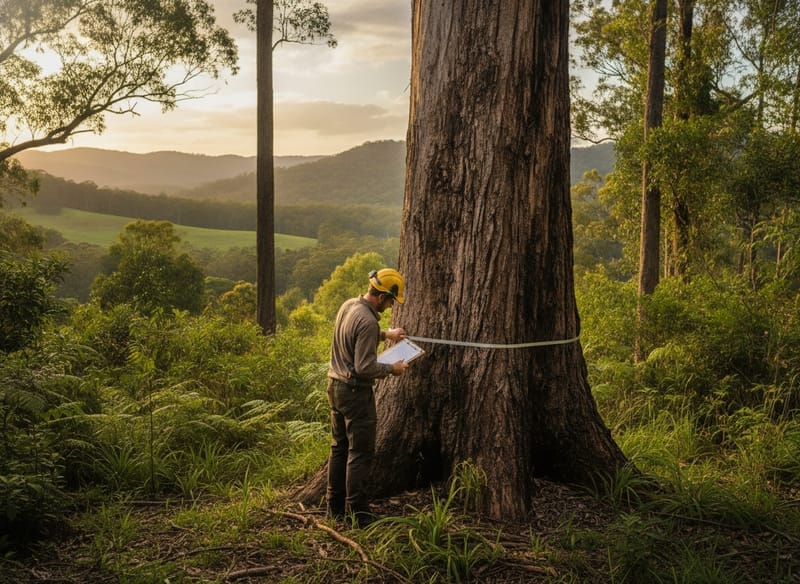
When disaster strikes, our streamlined emergency process guarantees action, clear communication, and safe resolution from start to finish: - Emergency Call & Rapid Triage: Our local team logs your call assessing the immediate structural threat level and dispatching an emergency crew quickly across West Mackay and nearby suburbs like South Mackay and Walkerston. - On-Site Hazard Assessment: Upon arrival, our lead arborist conducts a comprehensive Job Safety Analysis (JSA), identifying electrical hazards, ground stability issues, structural stress points, and underground service alignments. - Site Stabilization & Make-Safe: We secure the exclusion zone, tension high-risk stems, and perform urgent canopy or structural cuts to stop further building ingress or collapse. - Systematic Dismantling: Our climbers and ground crew systematically rig, lower, and process the timber using heavy chippers, chainsaws, and log loaders. - Clean-up & Insurance Documentation: We thoroughly rake the site, sweep pathways, process logs into mulch or remove green waste, and furnish you with itemised invoices, site photos, and formal reports tailored for immediate insurance claim processing.
Safety and compliance govern every emergency response we execute. Our operations strictly comply with Workplace Health and Safety Queensland standards, supported by fully certified crews holding AQF Level 3 in Arboriculture, Working at Heights (RIIWHS204D), and EWP tickets. We are fully insured with comprehensive public liability and WorkCover policies for complete peace of mind. Under the Mackay Region Planning Scheme 2017 and the Vegetation Management Act 1999, landholders must comply with environmental overlays. However, following declared weather events like ex-Tropical Cyclone Koji, the Mackay Disaster District clearing exemption remains active until 13 January 2027, permitting rapid clearing to protect life, prevent severe property damage, and maintain infrastructure. We supply comprehensive photographic evidence and written AQF Level 5 hazard assessments to ensure your property remains fully documented for council records and insurer audits.
West Mackay features a unique mix of heritage character homes, narrow residential allotments, and towering mature tree canopies. Signature species like the broad-spreading poinciana (Delonix regia) and dense backyard mango trees (Mangifera indica) thrive in our tropical climate, but their brittle wood structure makes them particularly susceptible to sudden branch failure during intense summer thunderstorms and cyclone squalls.
The local soil composition along the Pioneer River flood plain transitions rapidly from silty loam to saturated clay during the November-to-April monsoonal wet season. When 300mm+ of rain falls in a single weather system, the root anchor systems of large species such as forest red gums (Eucalyptus tereticornis), African mahoganies (Khaya senegalensis), and paperbarks (Melaleuca) lose structural friction, leading to whole-tree failures rather than simple limb drops. Accessing these rear yards between traditional high-set Queenslanders requires specialized tight-access rope techniques and lightweight ground-protection mats to avoid tearing up waterlogged lawns.
Once the fallen timber is removed, surviving trees on your property require close post-storm inspection. High winds often cause micro-fractures, bark tears, and hidden structural splits along primary unions that can lead to delayed failures weeks after the storm has passed. We recommend scheduling an AS4373-compliant health and hazard assessment for your remaining canopy. Formative pruning, deadwooding, and selective canopy thinning can dramatically reduce wind sail area and lower the risk of future storm damage. Avoid packing fresh soil over exposed rootzones of surviving trees, and monitor cracked branch forks for early signs of fungal decay. If you spot new leans or hanging debris, call our crew for a follow-up assessment.
Emergency tree response rates reflect the technical challenge, crew setup, and specialized safety gear required.
We provide transparent, upfront emergency pricing before commencing hazard work.
Providing storm response and tree removal across West Mackay.
Speak with our team right now for emergency clearing and hazard response.
Call 0495 090 664 Now