Managed Tree Size
Keep tall trees at an appropriate scale for suburban residential yards.
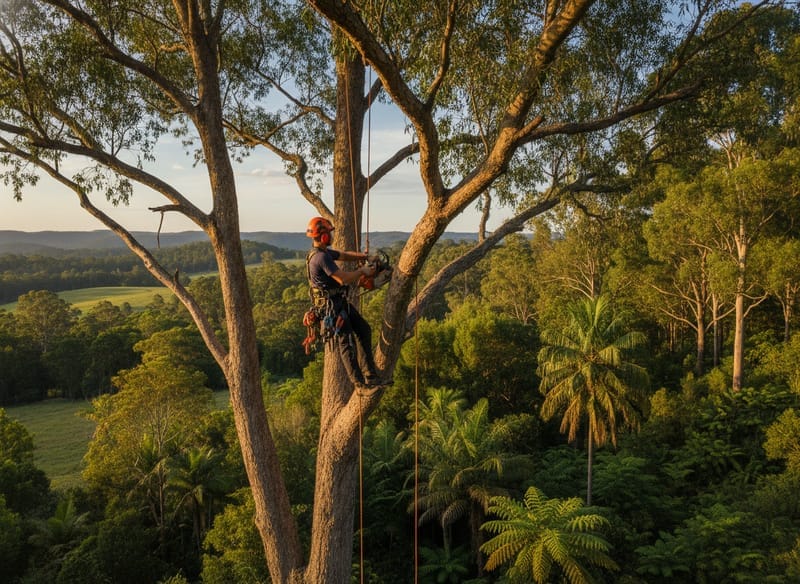
Targeted height reduction and canopy solutions to manage trees that have outgrown their setting.
Providing safe height and canopy management across Rural View properties.
When property owners search for tree lopping Rural View, they are usually looking to reduce the height or spread of an overgrown tree. While harsh lopping or 'topping' damages trees, our team delivers proper AS4373 canopy reduction cut methods that control height while preserving long-term structural integrity.
In fast-growing areas like Rural View, trees like African Mahogany or dense Mangoes can rapidly swallow up yard space and shade solar systems. Unqualified lopping creates clusters of weakly attached shoots that snap easily during summer storms. Our team uses selective reduction techniques to manage tree size safely without generating hazard regrowths.
Keep tall trees at an appropriate scale for suburban residential yards.
Proper reduction cuts heal correctly, avoiding internal trunk rot caused by lopping.
Lower total leverage forces on the tree trunk during high winds.
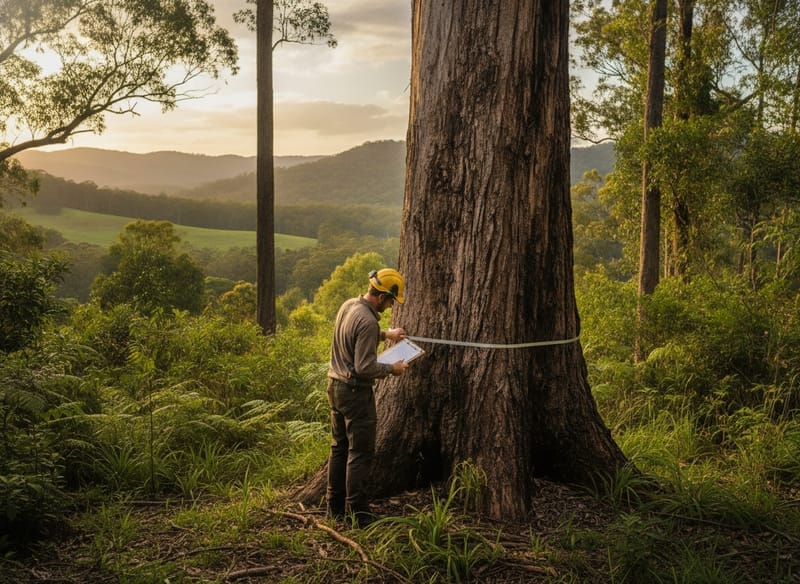
We inspect tree structure and evaluate how much height or lateral growth can be reduced.
We quote safe reduction pruning rather than damaging topping cuts.
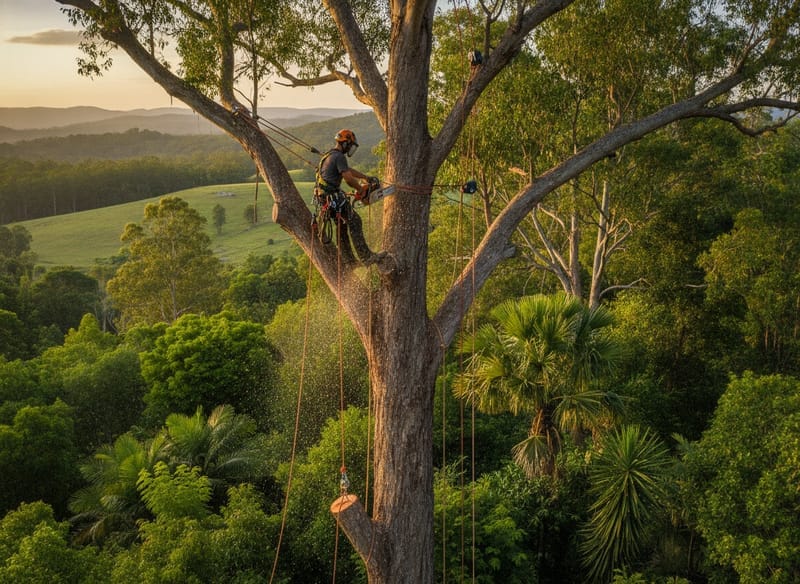
Our arborists cut branches back to suitable lateral stems using controlled rigging.
All removed timber and foliage is mulched and removed from your yard.
When backyards and acreage blocks across the northern beaches expand under tropical rainfall, managing vigorous canopy growth becomes an priority. If you are searching for Tree Lopping Rural View homeowners and property managers trust to tame runaway trees, our team delivers the right balance of size reduction, storm protection, and long-term tree health. Rural View is characterised by modern master-planned estates positioned alongside established acreage, where species like poincianas, backyard mangoes, and African mahoganies quickly outgrow their residential boundaries. Many property owners contact us for tree lopping when mature limbs begin encroaching on Colorbond roofs, blocking solar arrays, or hanging dangerously over driveways and fences. Whether you are located along Mackay-Bucasia Road or situated in an elevated cul-de-sac near the Northern Beaches Central hub, our climbers evaluate your canopy structure and reduce excess bulk safely. We deliver precision canopy pruning that keeps your home safe from severe coastal weather while preserving the natural beauty of your outdoor living area.
Traditional tree lopping—indiscriminately hacking the tops off branches to leave blunt stubs—creates severe long-term hazards for your home. While often viewed as a quick way to lower a large tree before cyclone season, crude topping cuts trigger a panic response in tropical species. The tree rapidly pushes out dense clusters of weakly attached shoots known as epicormic growth. In Mackay's humid, high-rainfall climate, these epicormic shoots grow at an astonishing rate. Because they sit on the outer surface of the branch rather than anchoring into deep heartwood, they become brittle and prone to snapping during summer storms. Furthermore, blunt lopping cuts leave large open wounds that cannot compartmentalise, inviting wood decay fungi and termite activity directly into the main trunk. Our team solves this problem by applying Australian Standard AS4373 (Pruning of Amenity Trees) to achieve the size reduction you want without ruining the tree. Rather than mutilating the crown, we execute target cuts at branch collars and lateral junctions. Our qualified climbers use targeted methods to achieve real clearance and hazard reduction: - Crown Reduction: Shortening outer canopy limbs back to healthy lateral growth points to reduce overall height and leverage. - Crown Thinning: Selectively removing crowded inner growth to allow high-velocity winds to pass cleanly through the canopy. - Crown Lifting: Pruning lower secondary limbs to create practical clearance over driveways, fences, and outdoor spaces.
Every canopy modification we execute in Rural View is engineered around species characteristics, branch mechanics, and Australian Standards.
We reduce the height and lateral spread of overgrown trees by cutting stems back to viable secondary branches that measure at least one-third the diameter of the removed branch. In full alignment with AS4373, we remove no more than 25–30% of live foliage in a single season, maintaining structural integrity and preventing shock.
Our climbers selectively remove dead, crossing, rubbing, and structurally compromised branches throughout the interior crown. This uniform thinning reduces the 'sail area' of dense canopies—such as poincianas and raintrees—allowing monsoonal wind gusts to pass through without generating excessive branch torque.
We remove lower structural branches to establish certified vertical clearance over rooflines, sheds, overhead service drops, pathways, and boundary lines. All cuts are executed at the branch bark ridge and collar to encourage rapid cambial roll and natural wound sealing.
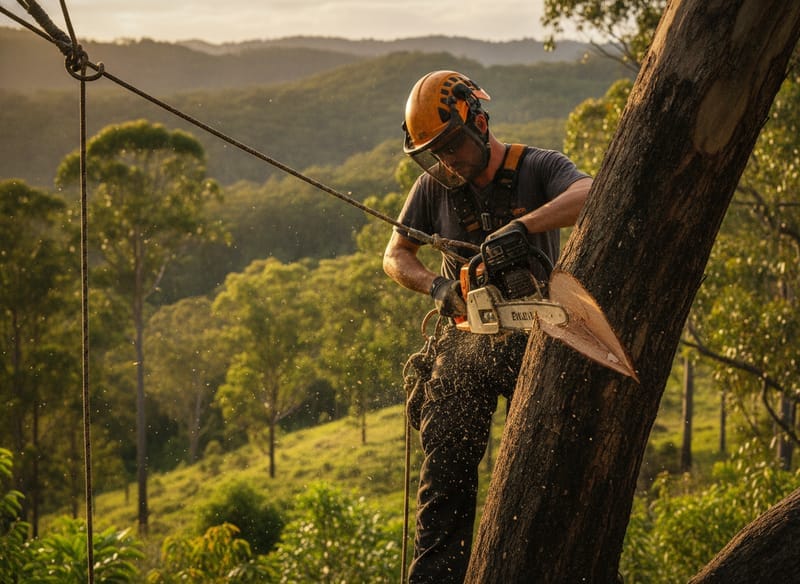
Using top-handle chainsaws and precision rigging, we identify and dismantle individual limbs affected by fungal pockets, borer galleries, storm splits, or included bark junctions before they fail onto high-value property assets.
Where an overgrown tree or declared weed (such as an African tulip) is slated for complete removal, our team carries out controlled sectional lopping. We use friction lowering devices, dynamic rigging ropes, and pulleys to lower massive timber safely within confined suburban drop zones.
From your initial inquiry to the final site sweep, our crew follows a systematic approach designed for maximum safety and efficiency:
Tree work is high-risk trade work that demands strict technical compliance and professional qualifications. Our climbing arborists hold minimum AQF Level 3 in Arboriculture, backed by certified training in Working at Heights (RIIWHS204D), chainsaw cross-cutting and felling units, and EWP operation.
All amenity tree pruning is executed strictly within the guidelines of AS4373-2007 (Pruning of Amenity Trees), avoiding damaging heading cuts. For complex development applications, root protection zones, or hazardous tree disputes under the Mackay Regional Council planning framework, our AQF Level 5 consulting arborist supplies comprehensive risk assessments and formal arborist reports.
We operate with full commercial public liability insurance and comprehensive WorkCover for every team member on site, providing absolute peace of mind for residential, acreage, and commercial property owners across Rural View.
Carrying out successful Tree Lopping Rural View projects requires deep familiarity with local soil profiles, microclimates, and regional weather patterns. Situated just inland from Bucasia, Blacks Beach, and Eimeo, Rural View receives coastal wind gusts alongside the intense monsoonal rainfall typical of tropical North Queensland.
During the wet season from November to April, local soils become deeply saturated. When heavy rain is paired with severe storm fronts or cyclone conditions—such as ex-Tropical Cyclone Koji—heavy, unpruned canopies place massive levering loads on root systems. Broad canopy species like poinciana (*Delonix regia*), backyard mango (*Mangifera indica*), and African mahogany (*Khaya senegalensis*) require regular crown management to prevent catastrophic branch drop.
Property owners must also navigate local planning regulations. Under the Mackay Region Planning Scheme 2017, mapped environmental significance and wildlife habitat overlays can apply to acreage boundaries. In addition, declared weeds like the African tulip (*Spathodea campanulata*) warrant systematic reduction and removal. Our team handles these local conditions daily, ensuring your canopy is storm-ready, safe, and fully compliant with Mackay Regional Council requirements.
Once our climbers have completed canopy reduction work, taking proactive steps helps your trees recover smoothly and stay resilient: - Apply Quality Mulch: Spread a 75–100mm layer of fresh arborist woodchips across the tree's root zone, keeping mulch 100mm back from the trunk base to prevent collar rot while locking in soil moisture. - Hydrate During Dry Spells: In the hot dry spring months before the monsoonal rains break, provide deep, infrequent watering at the drip line to support balanced root function. - Inspect Epicormic Regrowth: Keep an eye on fast-growing shoots after summer storms. Any crowded water sprouts should be formatively pruned before they become heavy limbs. - Pre-Cyclone Structural Audits: Book an annual canopy assessment with our crew prior to November so we can eliminate storm hazards before the tropical wet season arrives.
Pricing for canopy reduction and lopping alternatives in Rural View varies based on scope and access.
We offer straightforward upfront pricing to give you the best structural results.
Servicing Rural View and surrounding residential communities.
Talk to our arborists about proper canopy reduction solutions.
Request a Quote