Complete Site Restoration
Transform chaotic storm-damaged yards back into clean, safe outdoor spaces.
Comprehensive cleanup, canopy restoration, and fallen tree clearance following severe storm events.
Serving Glenella, Mount Pleasant, and storm-affected Mackay districts.
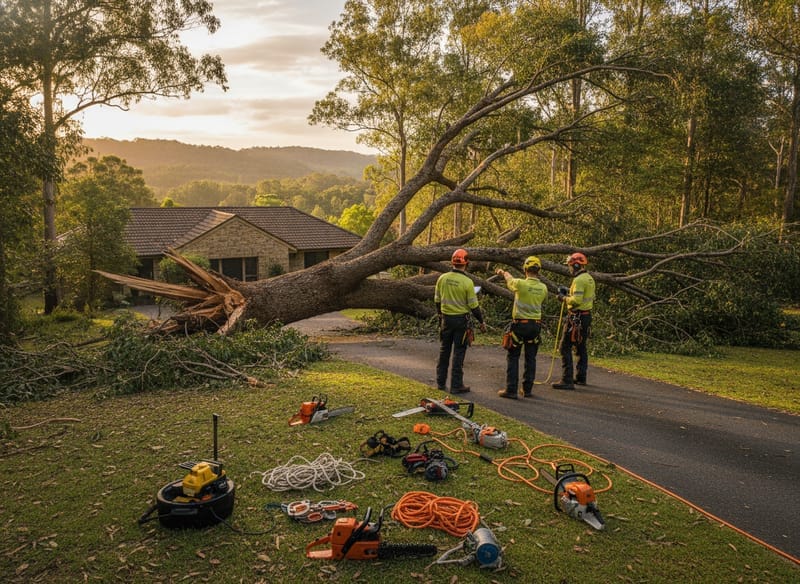
Severe weather systems across the tropics leave behind broken canopies, torn branches, and uprooted trees. Our storm damage tree removal Glenella service handles full property cleanups safely.
Events like ex-Tropical Cyclone Koji demonstrate how storm surges and high rain volumes cause widespread timber destruction in Glenella. Saturated ground combined with wind shear creates complex multi-tree clearing jobs.
Transform chaotic storm-damaged yards back into clean, safe outdoor spaces.
Remove cracked and hanging limbs before they fall unexpectedly in normal weather.
Save damaged trees through clean corrective pruning cuts rather than unnecessary total removal.
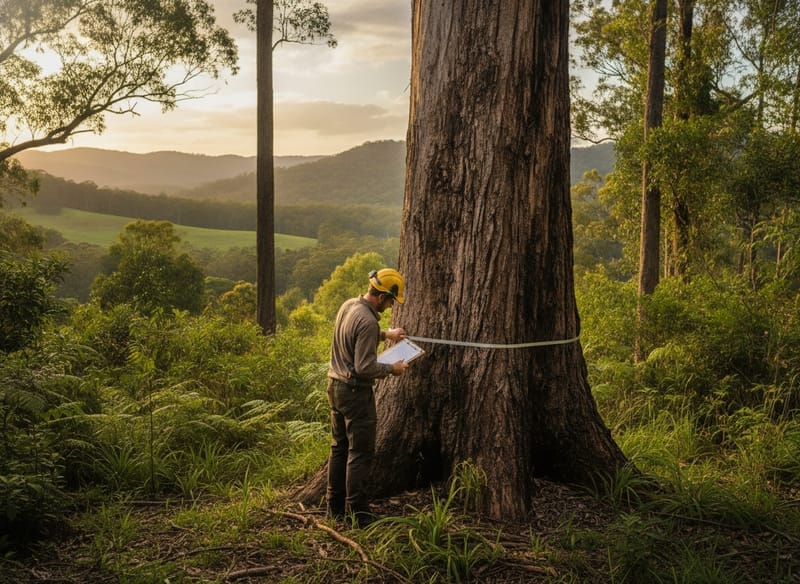
We survey the entire property to identify hidden splits and unstable limbs.
Clear photos are taken prior to work to support landholder records and insurance claims.
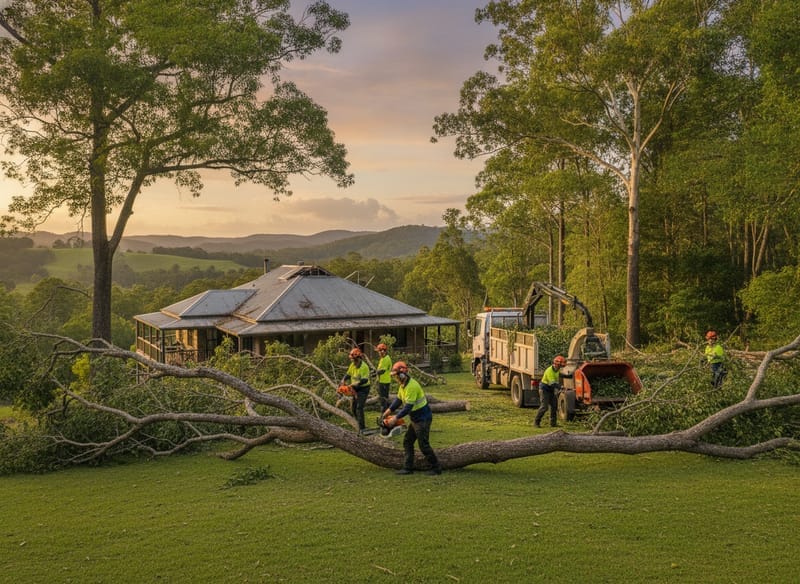
Fallen and damaged timber is cut into manageable sections using chainsaws.
All debris is chipped and hauled, leaving your grounds completely clear.
When severe monsoonal weather and cyclonic squalls strike our region, prompt and professional Storm Damage Tree Removal Glenella property owners rely on becomes essential for safeguarding lives and assets. Glenella features a diverse mix of expansive acreage properties, modern residential developments, and established leafy streets nestled beneath the Pioneer Valley hinterland. This rich canopy makes the suburb uniquely vulnerable when high-velocity gale-force winds tear through, turning mature shade trees into urgent hazards within minutes. Our experienced team provides help across Glenella, North Mackay, Richmond, and surrounding districts. Whether you are dealing with a massive poinciana collapsed across your driveway, a split forest red gum resting precariously on your roof, or splintered branches tangled in service lines, we have the heavy machinery, specialist climbing equipment, and qualified arborists to neutralise the danger. We understand the stress and urgency that follows severe weather events like ex-Tropical Cyclone Koji. Our arborists arrive fully equipped to stabilise unstable root plates, systematically dismantle damaged timber, and restore safety and access to your property with uncompromising care and precision.
Attempting to clean up storm-damaged timber without professional training and specialised equipment is one of the most hazardous undertakings a property owner can face. Storm-felled trees rarely rest flat or predictably; they exist under massive kinetic loads, with complex internal tension and compression forces ready to snap violently when cut. Untrained chainsaw operators face severe risks from barber-chair trunk splits, sudden kickback, rolling logs, and overhead 'widow-makers'—snapped branches suspended invisibly in the upper canopy.
Using utility vehicles, chains, or farm equipment to pull down partially fallen trees frequently leads to disastrous secondary damage, collapsing boundary fences, crushing underground utilities, or tearing through guttering and eaves. Furthermore, improper, indiscriminate chainsaw cuts can irreparably ruin surviving mature trees, leaving jagged tears that invite fungal decay, wood-boring insects, and future structural failure.
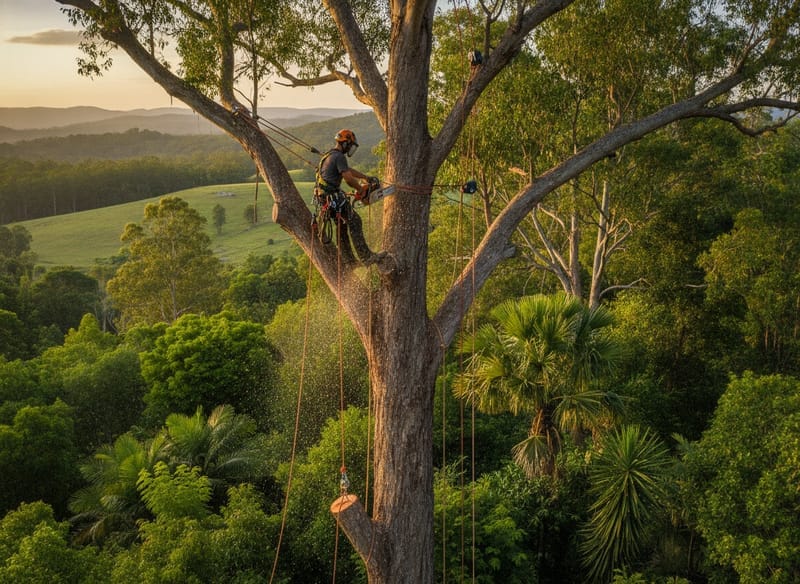
Our approach solves these dangerous hazards through systematic risk assessment and qualified arboricultural methodology. Our AQF Level 3 climbing arborists and ground crews calculate load dynamics before every cut, utilising controlled friction rigging, dynamic mechanical advantage winches, and crane-assisted lifting systems. We safely release stored tension in timber, protect surrounding structures, and execute precision remedial pruning in accordance with AS4373 Pruning of Amenity Trees to preserve any salvageable canopy.
When severe weather strikes Glenella, our crews deploy specialised rigging, dynamic dismantling techniques, and heavy timber processing machinery to safely clear compromised trees. Here is an overview of our core emergency storm-response capabilities:
Executing technical bore cuts, tongue-and-groove cuts, and directional relief notches on storm-loaded trunks and hung-up limbs. This neutralises dynamic internal wood tension, preventing barber-chairing and dangerous recoil before the final felling cut.
Deploying high-strength arborist rigging lines, impact-rated friction bollards, and dynamic rigging blocks to carefully secure, cut, and lower fractured heavy timber over roofs, carports, and boundary fencing without ground impact.
Coordinating mobile cranes and knuckle-boom loaders to sling and hoist massive, unstable tree stems directly off dwellings and garages in confined residential blocks, eliminating secondary load transfer onto compromised building structures.
Utilising insulated EWPs and compact tracked spider lifts to access dangerous, structurally compromised canopies where trunk splitting or root-plate lifting makes traditional rope-access climbing unsafe.
Processing high volumes of green storm debris on-site using heavy-duty 12-inch disc and drum wood chippers. Material is converted into clean organic mulch for ground retention or hauled away in high-sided tipper trucks.
Securing partially uprooted root plates with steel winch lines to prevent sudden roll-back during trunk severance, followed by high-powered hydraulic stump grinding to 200–300mm below grade to eliminate ground-level trip hazards.
From the moment you contact our Glenella storm response dispatch, our crews follow a structured protocol designed to stabilise your site quickly and transparently: - 1. Emergency Site Triage & Hazard Assessment: We arrive on-site to evaluate structural risks, identify live electrical service hazards, and categorise trees by immediate threat level (Priority 1: dwelling/power line impact; Priority 2: suspended or hung-up limbs; Priority 3: compromised standing stems; Priority 4: general ground debris). - 2. Comprehensive Photographic Evidence & Insurance Quoting: Before initiating work, we document all storm damage with high-resolution photographic evidence and prepare detailed, itemised written quotes formatted for assessment by your insurance provider. - 3. Exclusion Zone & Site Safety Setup: We establish clear drop zones, pedestrian boundaries, and traffic management if work borders Glenella road corridors, ensuring absolute safety for residents and adjacent properties. - 4. Controlled Dismantling & Make-Safe Execution: Our climbing arborists and machinery operators systematically isolate and remove hanging limbs, relieve stored timber loads, and dismantle felled trunks using precision rigging or crane lifts. - 5. Processing, Chipping & Complete Clean-Up: All storm timber is cut, logs are extracted via loaders or tippers, and brush is processed through our chippers. We rake lawns, blow down hardscapes, and leave your grounds clean, secure, and fully accessible. - 6. Secondary Tree Health Assessment: We conduct a final post-storm audit of retained trees across your property to detect hidden structural fissures, recommending remedial pruning where necessary.
Our operations adhere strictly to the highest national safety standards in arboriculture. Every remedial cut and canopy reduction complies with AS4373 (Pruning of Amenity Trees), avoiding damaging tree-lopping techniques that trigger hazardous epicormic regrowth. For sites undergoing construction or post-storm rebuilding, we align with AS4970 (Protection of Trees on Development Sites) to safeguard retained root systems.
Our team includes qualified AQF Level 3 arborists and AQF Level 5 consulting arborists. We maintain comprehensive public liability insurance and full WorkCover coverage across all personnel and machinery. Every climber holds current certifications for Working at Heights (RIIWHS204D), Chainsaw Operations (FWPCOT units), EWP operation, and First Aid. We operate under stringent, job-specific Safe Work Method Statements (SWMS) on every storm site.
When executing Storm Damage Tree Removal Glenella acreage and residential properties present unique environmental challenges. The suburb transitions from low-lying alluvial flats near Foulden to elevated foothill blocks around Hill End and Glenella-Richmond Road. During the Mackay wet season (November to April), intense rainfall saturates the underlying clay soils. When gale-force wind bursts follow, the weakened root-soil matrix frequently causes whole-tree root-plate failures rather than simple branch drop. We regularly encounter structural failures in brittle, wide-spreading poincianas (*Delonix regia*) and mature mango trees (*Mangifera indica*) in older garden blocks, while fast-growing African mahogany (*Khaya senegalensis*) and shallow-rooted paperbarks (*Melaleuca*) in wet pockets suffer dramatic blow-overs. Regulatory compliance is equally critical. Tree removals in Mackay are governed by the Mackay Region Planning Scheme 2017 and state legislation under the Vegetation Management Act 1999. Following major weather disasters such as ex-TC Koji, official disaster clearing exemptions apply across the Mackay Disaster District (active through to January 2027), allowing property owners to clear immediate hazards to life, infrastructure, and property. However, council street trees remain protected under Local Law 1 (Administration) 2011, meaning public verge trees must be addressed through council reporting pathways.
Storm impacts do not always cause immediate failure; hidden structural damage can manifest weeks or months after a severe weather event. Following major storms, Glenella property owners should monitor surviving mature trees for subtle warning signs: - Cracks or hollow sounding wood along major trunk unions and primary scaffold limbs. - Mounding soil, fresh root tears, or ground upheaval on the leeward side of the tree base. - Rapid, weakly attached 'water-sprouts' (epicormic growth) bursting from fractured branch stubs. - Premature canopy yellowing or sudden leaf drop indicating root rupture and vascular shock. Avoid harsh 'topping' or flush-cutting torn limbs, as this accelerates heartwood rot. Instead, engage our qualified arborists before the next monsoonal season for a preventative hazard audit, canopy thinning, and structural deadwooding to ensure your trees withstand future severe storms.
Storm cleanup costs depend on the volume of debris and complexity of tangled or fallen trees.
Detailed quotes provided before starting storm recovery work.
Storm cleanup services across Glenella and surrounding areas.
Contact us today for professional storm damage tree cleanup and property clearance.
Get a Free Quote